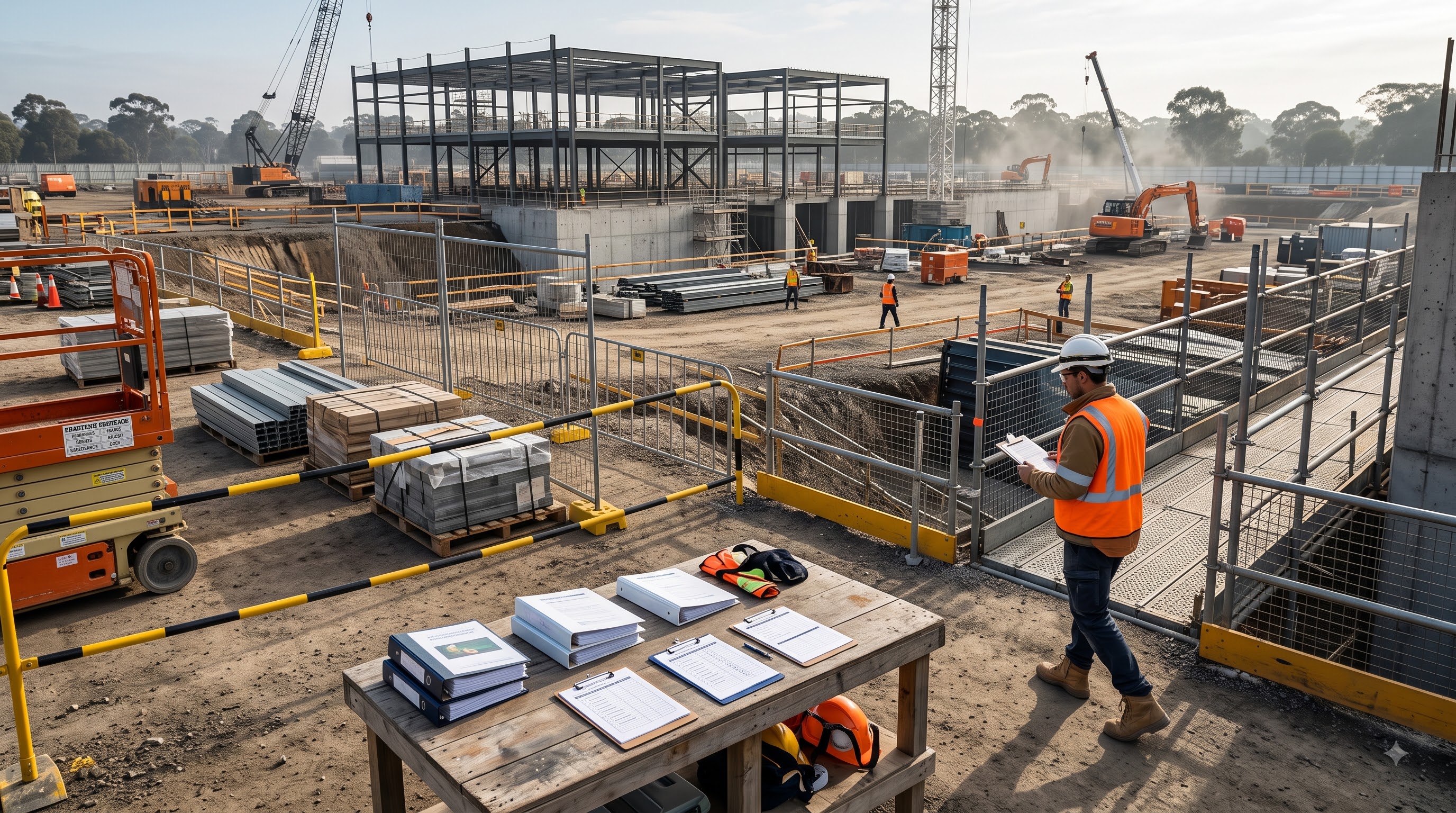
How to Prepare for a Construction Compliance Audit and Reduce Risk on Site
Preparing for a construction compliance audit is not about last-minute paperwork. It is about proving that your project controls work in practice. To stay audit-ready, centralise key documents, verify that Inspection and Test Plans are actively used on site, review nonconformities for repeat issues, and conduct internal construction site audits before the external review. A strong construction compliance audit process focuses on traceability, supervision, safety controls and corrective action effectiveness across ISO 9001, 14001 and 45001 requirements.
iAudit Global is audit management software built by certified ISO auditors that connects evidence, findings and corrective actions in one structured system, helping construction teams remain compliant and reduce risk across multiple projects.
I have spent the best part of two decades on construction sites, and I have seen the same scene play out more times than I can count. An audit is scheduled for the following morning, and the site office descends into chaos. Site managers are hunting for training records, supervisors are frantically updating ITPs, and someone is inevitably trying to find a signature from a subcontractor who left the site three weeks ago.
If this sounds familiar, you are not preparing for an audit. You are reacting to one.
Preparing for a construction compliance audit, whether it is for ISO 9001, 14001 or 45001, should not be a special event. It should be a reflection of how the project is controlled every day. If you have to spend days getting ready, it is a clear sign that your management system is not providing the control it was designed for.
Here is how I approach audit preparation to ensure that when the auditor arrives, you are showing them a controlled site, not a polished version of a messy reality.
The Foundation: Centralise Your Documentation

In construction, documentation is your primary evidence. If it isn't written down, it didn't happen. The biggest mistake I see is fragmented data. One project has its records on a local drive, another has them in a physical folder in the site hut, and the subcontractor approvals are buried in an email chain at head office.
To prepare effectively, you must centralise your documentation. Before an audit begins, you should have easy access to:
Contracts and Change Orders: Every deviation from the original plan must have a clear, authorised trail.
Subcontractor Approvals: Ensure insurance, RAMS and competence records are up to date and verified.
Project Plans and Specifications: Verify that the versions on site are the same as the ones in the office.
Training and Competence Records: These are often the first things an auditor will ask for, particularly for safety compliance.
When you centralise these records, you remove the stress of the hunt. You can present evidence in seconds rather than minutes, which immediately builds the auditor's confidence in your management system.
The Pre-Audit: Identifying the Gaps Early

I never recommend waiting for the external auditor to find your problems. A successful audit starts with a thorough internal review.
Start by reviewing your project documentation against the audit scope. Are your Inspection and Test Plans (ITPs) actually being used, or are they being filled in retrospectively? I often see ITPs that have been signed off for work that hasn't even started, or worse, work that was finished months ago with no signatures at all.
This is the time to identify non-conformities (NCRs) yourself. Identifying a deviation and showing how you are fixing it is actually a positive sign for an auditor. It proves that your system is working and that you have a culture of self-correction.
The Physical Site: Inspecting the Reality

Once the paperwork is in order, you must walk the site. An auditor will always compare what the documents say to what the site shows.
If your ISO 14001 plan says you have a controlled waste management system, but the skips are overflowing and contaminated, the paperwork is worthless. During your site walk, focus on:
- Safety Protocols: Are PPE requirements being followed? Is the signage correct? Are safety hazards like open edges or trip risks being managed effectively?
- Material Handling: Are materials stored correctly to prevent damage or environmental contamination?
- Workmanship: Is the quality of work matching the project specifications and tolerances?
- Staff Awareness: Talk to the people on the tools. If you ask a worker about the quality policy or the site safety rules, do they have a clear answer? Their awareness is a key part of your ISO 45001 and 9001 compliance.
The Audit Day: Professionalism and Transparency

When the auditor arrives, the way you manage the day is as important as the evidence you provide.
Be transparent. If an auditor asks a question, answer it directly. If you try to hide a known issue, a seasoned auditor will find it, and their scrutiny will double. Instead, show them the issue and, more importantly, show them the corrective action you have already put in place.
Use this time as a learning exercise. A good audit is not just about keeping a certificate on the wall. It is about finding ways to make the business run more efficiently. If the auditor identifies a better way to store materials or a more robust way to track training, take it on board.
Post-Audit: Turning Findings into Improvement

The work does not stop when the auditor leaves. In fact, the most important phase of a construction compliance audit is what happens next.
Analyse the findings. If there was a non-conformity, why did it happen? Was it a lack of training, a poor process or simply a lack of supervision? Use the PDCA (Plan-Do-Check-Act) cycle to address the root cause.
Develop actionable recommendations and present them to site management. If you do not change the process, the same finding will reappear in six months. Your goal is to move from fixing symptoms to preventing recurrence across all your projects.
How iAudit Global Simplifies Preparation

The reason audit preparation is traditionally so painful is that the data is disconnected. iAudit Global was built to solve this exact problem.
Instead of hunting for evidence, iAudit Global allows you to capture it in real time on the site. Photos, signatures and inspection records are attached to specific locations and dates. Your ITPs and checklists are digitised, meaning they are always up to date and never lost in a site hut.
Our platform provides:
- Centralised Visibility: See the audit status and NCR trends across all your projects from a single dashboard.
- Automated Reporting: Generate professional audit reports in minutes, not days.
- Risk-Based Scheduling: Focus your internal audits where the risk is highest, ensuring you are always ready for an external review.
- Connected PDCA: Track every non-conformity from identification through to verified closure and effectiveness checks.
When you use iAudit Global, you are not preparing for an audit for two weeks. You are ready for one every single day.
Stop Reacting, Start Controlling
A construction compliance audit should be a routine check of a healthy system. If you follow a structured approach by organising your documentation, conducting regular internal reviews and sampling the physical reality of the site, you remove the disruption and risk.
The best audit is the one where you can answer every question with a clear, evidenced piece of data, showing that you are in full control of your project quality, safety and environmental impact.