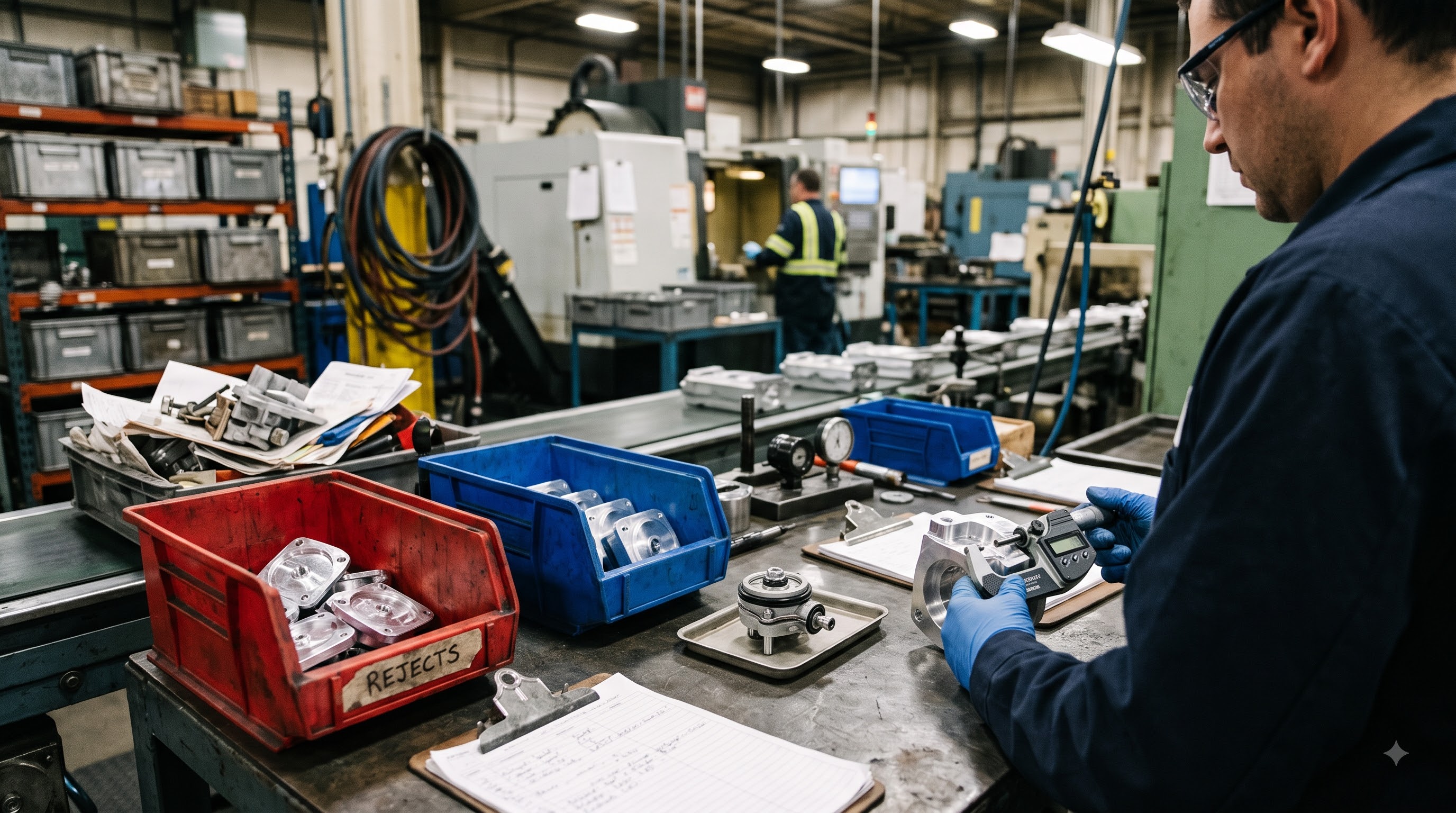
Common ISO 9001 Nonconformities in Manufacturing
When I review internal and external audit reports from manufacturing environments, the same patterns appear again and again.
Most ISO 9001 nonconformities in manufacturing are not dramatic system failures. They are gaps in control. A procedure exists, but it is not followed consistently. A record is required, but it is incomplete. A corrective action is raised, but the root cause is not properly addressed.
Understanding the common ISO 9001 nonconformities in manufacturing is the first step towards preventing them from recurring year after year.
Why ISO 9001 Nonconformities Are Common in Manufacturing

Manufacturing operates under pressure.
Production targets must be met. Shifts change. Temporary staff come in during busy periods. Supervisors focus on output. Documentation can become secondary.
In this environment, the quality management system only works if it is embedded in daily operations. If it lives in folders or separate spreadsheets, gaps appear quickly.
Many ISO 9001 nonconformities in manufacturing arise not because the organisation lacks procedures, but because the controls are not visible, monitored or consistently reviewed.
Common ISO 9001 Nonconformities in Manufacturing

Below are the issues I see most often during ISO 9001 audits in manufacturing settings.
Inadequate Control of Documented Information
Clause 7.5 requires control of documented information.
On the shopfloor, this often translates into outdated work instructions pinned to boards, printed procedures with no revision status, or operators following older versions saved locally.
The procedure may exist in the system, but the version being used in production is not controlled. This creates inconsistency and increases the risk of defects.
Weak Process Control and Monitoring
Clause 8.5 focuses on production and service provision.
Common findings include:
- •
Inspection records completed inconsistently
- •
Acceptance criteria not clearly defined
- •
Process parameters not monitored as specified
- •
Deviations corrected informally without documentation
In manufacturing, process control must be measurable. If monitoring records are incomplete or unclear, auditors will raise nonconformities.
Poor Traceability of Materials and Batches
Traceability is critical in many manufacturing sectors.
Common findings include:
- •
Missing batch numbers
- •
Incomplete material identification
- •
No clear link between raw materials and finished goods
- •
Manual labelling errors
If a product recall were required, the organisation would struggle to identify affected batches. Auditors test this by sampling traceability records.
Supplier Evaluation Gaps
Clause 8.4 requires control of externally provided processes, products and services.
Common findings include:
- •
An approved supplier list that has not been reviewed
- •
No evidence of supplier performance monitoring
- •
Lack of documented criteria for evaluation or re-evaluation
Manufacturers often rely heavily on suppliers. If supplier performance is not monitored formally, risks enter the production process unnoticed.
Calibration and Equipment Control Failures
In manufacturing, measurement equipment must be controlled.
Common findings include:
- •
Expired calibration certificates
- •
No identification of calibration status
- •
No assessment of impact when equipment is found out of tolerance
Auditors will sample gauges and measuring devices directly on the floor. If one is overdue for calibration, the finding is usually straightforward.
Corrective Actions That Do Not Address Root Cause
Clause 10.2 requires organisations to eliminate the cause of nonconformities.
What I often see is this:
A problem is identified
The immediate issue is fixed
A corrective action is marked as closed
The same issue appears six months later
Root cause analysis is either superficial or undocumented. Without structured follow up, recurring nonconformities become normal.
Competence and Training Records Not Evidenced
Clause 7.2 requires demonstration of competence.
In manufacturing environments, training is sometimes informal. An experienced operator shows a new starter how to perform a task. The skill transfer happens, but the evidence does not.
During an audit, the question is simple. Can you demonstrate that the person performing this task is competent? If records are incomplete or inconsistent, a nonconformity is likely.
Why These Nonconformities Keep Reappearing

Many manufacturing organisations correct individual findings but do not analyse trends across audit cycles.
Findings are recorded in spreadsheets. Reports are stored in shared drives. Corrective actions are tracked in separate documents. There is no single view of recurring issues across sites or shifts.
As a result, the same ISO 9001 nonconformities in manufacturing appear year after year.
Without structured trend analysis and linked corrective action tracking, improvement remains local rather than systemic.
How to Reduce ISO 9001 Nonconformities in Manufacturing

Reducing common ISO 9001 nonconformities in manufacturing requires more than stronger audits. It requires structure.
Practical steps include:
Using clause aligned internal audit checklists
Linking findings directly to documented evidence
Assigning corrective actions with clear owners and deadlines
Reviewing trends across departments and sites
Verifying the effectiveness of corrective actions before closure
Internal audits should not only confirm compliance. They should identify patterns.
Where multiple sites operate, cross site comparison is particularly valuable. If one factory manages calibration effectively and another struggles, the difference should be visible.
Internal audits should not only confirm compliance. They should identify patterns. Understanding why internal audits are critical in manufacturing is the first step toward moving from reactive document retrieval to structured performance management.
The goal is not to eliminate every minor finding. It is to prevent systemic weaknesses from repeating.
How iAudit Supports ISO 9001 Internal Audits in Manufacturing
We built iAudit Global because we saw these exact nonconformities happening in the businesses we were auditing. We realised that spreadsheets and Word documents were part of the problem. They do not allow for the visibility or the follow-up that a modern manufacturing business needs.
Our software is designed to help manufacturing teams stay ahead of these common findings:
If you are reviewing your internal audit process and want to move away from scattered spreadsheets, you can explore how we structure manufacturing audits at iaudit.global.
We offer a 14-day free trial so you can see how a structured system can help you identify and close out nonconformities before they become a risk to your certification.